
Global / English
Improving the Self-Tanning Experience: Natural-Looking Color and Reduced Malodor
Skin Color control
Many self-tanning products use dihydroxyacetone (DHA) , which reacts with amino acids in the outermost layers of skin to create a temporary tanned appearance. Consumers want self-tanning products that look natural, develop evenly, and fit easily into their daily routines. Based on extensive consumer research, Kao has been studying not only how to achieve better color, but also how to improve the overall sensory experience of self-tanning products.
A key challenge with DHA is malodor, which forms as a byproduct of the Maillard reaction on skin and typically intensifies over time. At Kao, we have studied both the chemical mechanisms behind this odor and how consumers perceive it. Through a partnership with Kao’s Sensory Science Research Lab, Kao Americas Research Laboratories identified more than one hundred volatile compounds, including 1-butanol, acetic acid, and pyrazine derivatives associated with odor formation under real-use conditions. Among them, alkyl pyrazines were found to be key contributors to the characteristic earthy, potato-like odor that can appear several hours after application. Based on these findings, we developed a fragrance-based approach to help manage this unpleasant odor, either by masking it or selectively reducing its perception. These efforts contribute to a more enjoyable and confidence-inspiring self-tanning experience.
In addition to odor control, Kao is also working to improve the appearance and durability of self-tanning color. Conventional sunless tanning systems can sometimes produce uneven color, a less natural-looking tone, or limited wear time, as shown in Figure 1. To address these issues, our research focuses on controlling the chemical and physical environment in which color forms on skin. We study how factors such as polyol composition and water activity influence color development, as illustrated in Figure 2. This work results in more even, longer-lasting, and more natural-looking color.
Through these efforts, Kao is advancing self-tanning technology from both sensory and performance perspectives, helping create products that better meet consumer expectations for appearance, comfort, and ease of use.
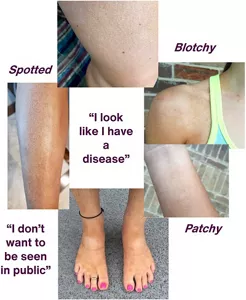
Figure 1 Limitations in Natural Tone and Even Coverage with Traditional Sunless Tanning Systems.
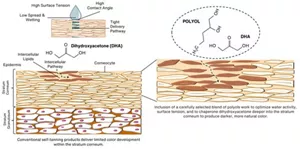
Figure 2 Factors Influencing DHA Color Development in the stratum corneum
- Home
- Innovation
- Research & Development
- Global Network
- Improving the Self-Tanning Experience: Natural-Looking Color and Reduced Malodor
- Home
- Innovation
- Research & Development
- Global Network
- Improving the Self-Tanning Experience: Natural-Looking Color and Reduced Malodor